

Seller Financing as a Retirement-Income Substitute — the Real Math

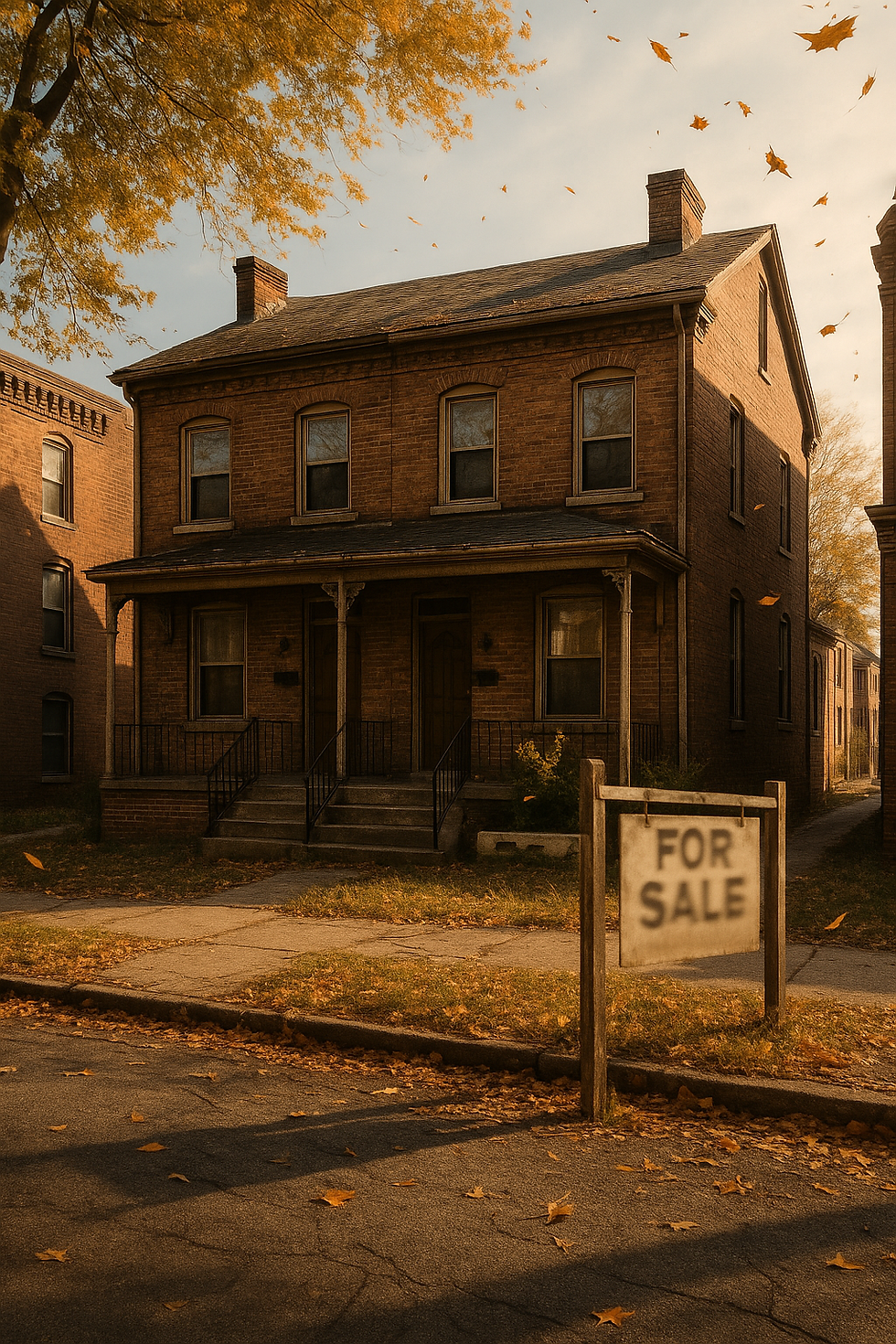
There's a particular kind of owner I talk to fairly often in York County. They're somewhere north of sixty, they've had the building a long time, it's paid off or nearly so, and they're tired. Not in crisis — just done with the 9 p.m. calls and the turnovers and the fact that a water heater is always about to fail somewhere.
And they don't sell, for one reason: the rent is the income. Giving up the building means giving up the check, and a lump sum in a brokerage account doesn't feel like the same thing.
Carrying a note is the structure that addresses exactly that. It's worth walking through with real numbers rather than in the abstract, because the arithmetic is more concrete than most people expect.
Standing caveat: I'm a buyer, not a CPA and not a financial advisor. This is arithmetic and structure, not advice about your situation. Your accountant and your attorney are the ones to run it against your actual circumstances.
The setup
Take a York County 3-unit that sells for $350,000, with the buyer putting 20% down — $70,000 at closing — and the seller carrying the remaining $280,000 on a note at 6.5%, amortized over 20 years.
That's a fairly ordinary structure. Here's what it produces.
What the seller actually receives
$70,000 at closing. Cash, immediately.
$2,087.60 per month for the term — call it $25,051 a year.
$501,025 total over the full 20 years, of which $221,025 is interest.
Add the down payment and the note payments together and the $350,000 building produces about $571,000 over the life of the arrangement.
A couple of details worth seeing rather than assuming. In year one, of that $25,051 received, roughly $17,992 is interest and $7,059 is principal — front-loaded interest, exactly like any amortizing loan, just pointed the other direction. And if the note carried a 10-year balloon instead of running the full term, the remaining balance at that point would be about $183,852, due in one payment.
The comparison that matters
The question isn't whether $2,087 a month is a good number in isolation. It's how it compares to the two alternatives the owner is actually choosing between.
Against keeping the building. Say those three units gross $2,700 a month. That's more than the note payment — but it's gross. Out of it come taxes, insurance, water and sewer, repairs, capital reserve for the roof and the systems, and vacancy. On an older small multifamily, what's left after all of that is frequently in the same neighborhood as the note payment, and sometimes below it.
The note payment, by contrast, is net. There's no roof in it. No vacancy. No turnover. No tenant. Comparing $2,700 of gross rent to $2,087 of net note payment and concluding the building wins is the most common error in this whole analysis.
Against selling for a lump sum. A conventional sale puts roughly $350,000 in your hands, minus whatever the tax bill turns out to be — and that bill arrives all in one year. Whatever remains then has to be invested to produce income, at whatever yield is available, with whatever risk that carries. The note, by contrast, produces a contractually fixed 6.5% on the outstanding balance, secured by a building you know intimately, and it spreads the gain across years instead of stacking it into one.
What you give up
Being honest about the other side, because this structure gets sold too enthusiastically:
You're the bank. If the buyer stops paying, you have remedies, but exercising them takes time and money — and you may end up owning the building again. For an owner whose entire goal was a clean exit, that's a real consideration.
The payment is fixed. $2,087 in 2046 buys considerably less than $2,087 today. A shorter term or a balloon addresses this; each brings its own tradeoff.
No appreciation. If the building is worth substantially more in twelve years, that belongs to the buyer. You locked your price.
The money isn't all available. If you need $200,000 for something in year three, it isn't sitting there. Notes can be sold, but generally at a discount.
Who you sell to becomes your business. Their ability to operate the building determines whether you get paid. That's not a formality anymore.
Who this genuinely fits
The structure works well for an owner who:
Wants to stop operating more than they want a lump sum;
Is living on the income the property produces and needs that to continue;
Has held long enough that a single-year gain would be painful;
Doesn't have a near-term need for the whole amount;
Can evaluate a buyer and is comfortable holding a secured note.
It fits poorly for an owner who needs the full proceeds now, wants a permanent clean break with no ongoing connection, or has an alternative use for the capital that beats 6.5%.
The questions to settle before agreeing to anything
Down payment. Interest rate. Amortization term. Balloon — yes or no, and when. Late payment terms. How the note is secured, and where it sits if there's any other debt. Whether it's assumable. What happens if you pass away during the term.
Then two professionals: an attorney to document it properly, and your accountant to tell you what the structure does to your return before you sign. The tax treatment follows the structure, and once it's signed the structure is fixed.
How I fit into this
I'm a local buyer here in York County. I buy 2-4 unit rentals directly from owners and hold them — and seller financing is a structure I'm genuinely open to, not a fallback. Because I'm buying directly, the terms above are things we can actually sit down and work through rather than take or leave.
If your building is mostly a monthly check at this point and you've been putting off the decision because you don't want to lose it, that's precisely the situation this structure exists for. The free York County Landlord's Guide covers the questions worth asking first. Or call or text me at 717-347-6770 and we can put real numbers to your building — no pressure, no obligation.
---
Related reading: how an installment sale spreads your tax over years, why September is when smart landlords start tax-year-end planning, and depreciation recapture — the tax surprise that catches sellers.
Want to talk about your specific situation?
I'm Ed Lane at Yellow House Buyers, LLC. I'm actively looking to buy 2-4 unit rental properties in York County directly from owners. I buy to hold long-term — not to flip, not to wholesale. If you want a no-pressure conversation about your property, here's how to reach me.
Or download the free 2026 York County Landlord's Strategy Guide — it walks all six selling scenarios with the actual math.


Comments