

Selling With One Unit Vacant and One Occupied — How Buyers Price It

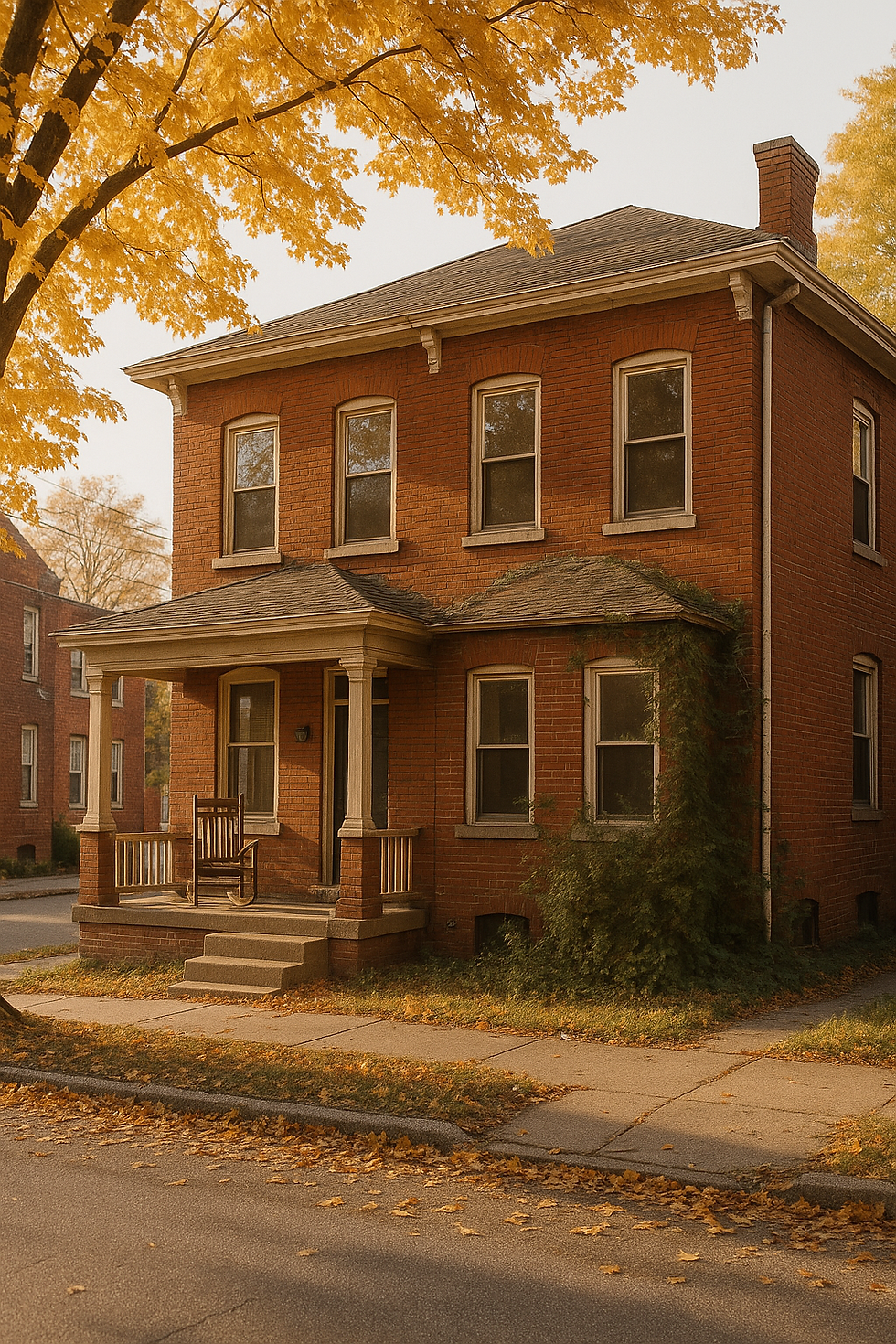
It's one of the most common situations in small multifamily: a duplex where one side is leased to a tenant who's been there a while, and the other side is empty. Maybe somebody gave notice in the spring, maybe you were mid-turn when you decided to sell instead.
Owners tend to look at that building as one property with one number. Buyers don't. A careful buyer underwrites it door by door, because the two doors carry completely different information — and completely different risk.
Understanding how that split works tells you where your price is actually coming from, and where you have room to move it.
The occupied door: known income, limited control
The leased unit is the one most owners assume is doing the heavy lifting. It's producing income, it has a paper trail, and it looks stable. A buyer agrees — up to a point.
What the buyer values:
Income they can verify. A signed lease and a payment history are facts, not projections. That's worth real money.
No lease-up cost. No turn, no marketing, no vacancy gap on that side from day one.
A track record. A tenant who's paid on time for three years is a demonstrated outcome.
What the buyer discounts:
The rent is fixed until it isn't. Whatever that unit rents for is what it rents for until the lease ends. If it's $850 and comparable units in the neighborhood are getting $1,050, the buyer is locked out of $200 a month for the remaining term.
The tenant comes with the building. So do the terms — including anything that was agreed verbally and never written down. Pets, parking, the garage bay, who handles the yard, that one repair you promised in 2024.
They can't really see it. An occupied unit gets a brief, scheduled walk. What's behind the walls of a unit you toured for ten minutes is an assumption, and buyers assume conservatively.
The deposit has to reconcile. Deposits transfer at closing and Pennsylvania has rules about how they're held. Sloppy deposit records are a small problem that creates a big delay.
So the occupied door gets priced on verified income minus the cost of not being in control of it.
The vacant door: no income, full access
The empty unit is the one owners apologize for. Depending on the buyer, it doesn't need an apology.
What the buyer values:
Access. They can get in, open things up, and see the actual condition — not a fifteen-minute impression.
A clean start. No inherited lease, no inherited tenant, no inherited verbal agreements.
Room to reset. Whatever that unit could rent for after work, they're free to go get it, immediately, without waiting out a term.
What the buyer discounts:
The rent is a projection. You may be completely right that it'll get $1,100. A buyer still underwrites it as an estimate, and they'll usually use a number a little below yours.
Carrying cost until it's filled. Taxes, insurance, and utilities run on an empty unit exactly like a full one.
Lease-up time and cost. Turn, market, screen, sign. Weeks, plus money.
So the vacant door gets priced on projected income minus the cost and time to actually realize it.
Where the price actually moves
Once you see the two-door split, it's clearer where your number comes from — and it's usually not where owners expect.
The occupied unit's rent level matters more than its occupancy. A long-term tenant at a rent that hasn't moved in years is not the asset it feels like. It's income today and a ceiling tomorrow. If your occupied side is well under what comparable units are getting, that gap is the single biggest thing pulling your price down — and filling the other unit doesn't fix it.
The vacant unit's condition matters more than its emptiness. A clean, dry, ready unit reads as a timing decision. A unit that's empty because of an unresolved problem reads as deferred cost, and it gets priced as one.
The paperwork on the occupied side is worth more than people think. Lease, payment ledger, deposit accounting, and a signed estoppel from the tenant confirming the terms. That package converts your claimed income into verified income. Without it, a buyer treats your leased unit a little more like the vacant one — as a number you told them.
The mistake worth avoiding
The common error is treating the two doors as one story and pricing them on a single assumption: taking the occupied unit's rent, doubling it, and calling that the building's income. It overstates the vacant side (which has costs before it earns anything) and, when the in-place rent is below what the area supports, it quietly understates what the building could do.
Buyers won't make that error. They'll separate the doors whether you do or not — so you're better off separating them first and knowing what each side is actually worth.
What helps your number, practically
Have the lease, the ledger, and the deposit accounting in one place for the occupied unit.
Know the last tenant's move-out date and rent for the vacant one, and be able to say in a sentence why it's still empty.
Know what comparable units in your part of York County are actually renting for right now — not what you hope, and not what you charged in 2021.
Decide deliberately whether to re-lease the empty side. If your only reason is to make the rent roll look symmetrical, price the turn and the lost weeks first.
How I look at it
I'm a local buyer here in York County. I buy 2-4 unit rentals directly from owners and hold them, so a mixed-occupancy building is a normal week for me, not a complication. The occupied side I underwrite on the paperwork; the vacant side I underwrite on condition and what the unit can realistically get once it's turned. Neither one needs to be fixed before we talk.
If you're sitting on a duplex with one door leased and one empty and you want to know what that actually prices at, the free York County Landlord's Guide walks through the two-door math. Or call or text me at 717-347-6770 and I'll give you a number to work from — no pressure, no obligation.
---
Related reading: what an empty unit does to your sale price, the true cost of turning over a unit before a sale, and the tenant won't let you show the unit — you can still sell it.
Want to talk about your specific situation?
I'm Ed Lane at Yellow House Buyers, LLC. I'm actively looking to buy 2-4 unit rental properties in York County directly from owners. I buy to hold long-term — not to flip, not to wholesale. If you want a no-pressure conversation about your property, here's how to reach me.
Or download the free 2026 York County Landlord's Strategy Guide — it walks all six selling scenarios with the actual math.


Comments